

SERVICES WE OFFER:
There is currently a waiting list for consulting. Please fill out a contact form and we will be in touch as soon as possible.
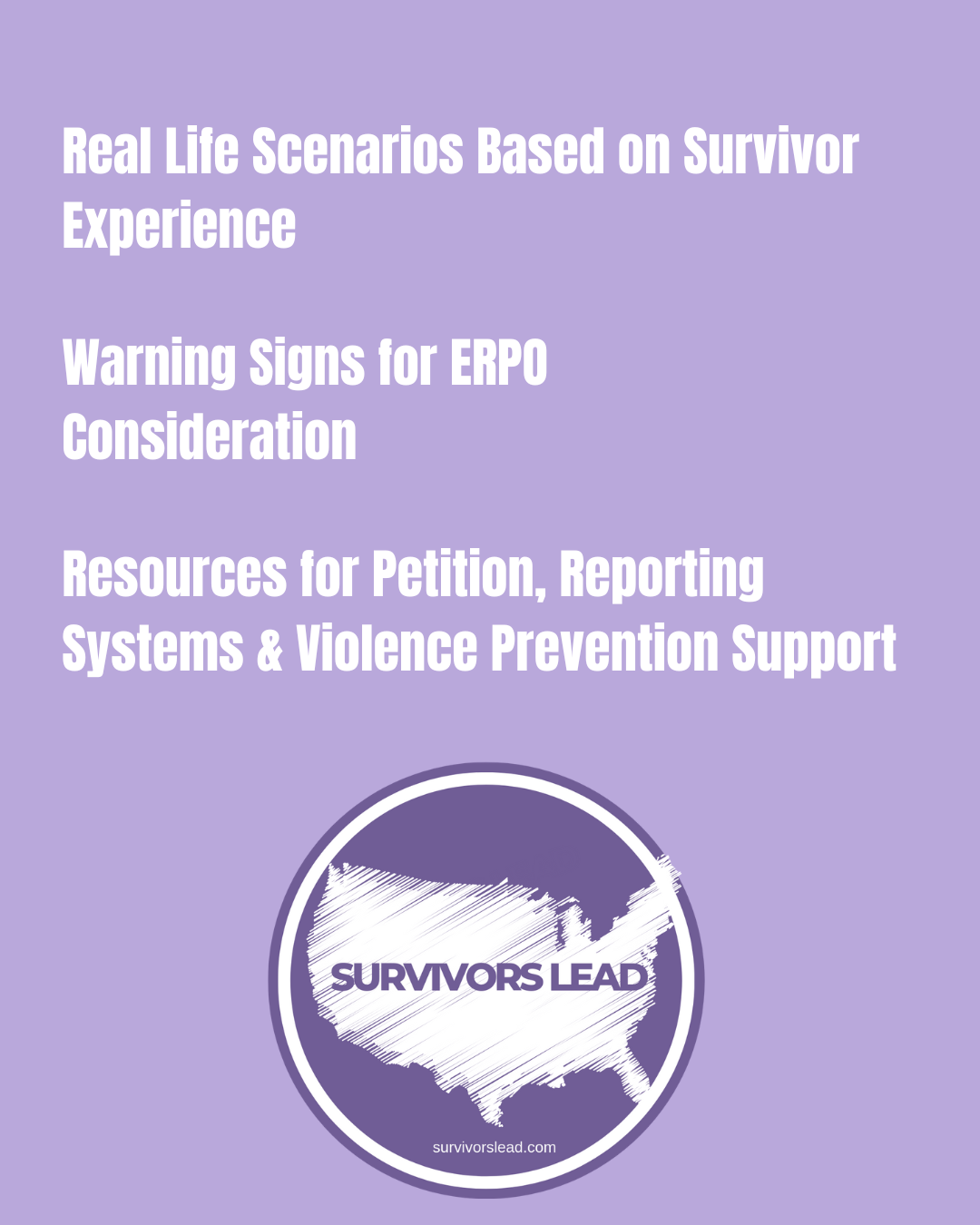
Extreme risk protection order (ERPO) Consulting and Education:
Uniquely informed by lived experience, real-world ERPO implementation, and survivor-centered scenarios that illuminate how risk unfolds in families, workplaces, and communities. We provide comprehensive, trauma-informed training and technical assistance to law enforcement, court professionals, social service providers, workplaces, and any community seeking to strengthen public safety.
Drawing from firsthand insight into warning signs, threat escalation, system breakdowns, and pathways to safe intervention, our customized workshops offer practical, evidence-based strategies for recognizing risk, navigating the ERPO process, and coordinating effective multi-disciplinary responses. Whether your agency is implementing ERPO for the first time or your community is seeking tools to prevent violence before it occurs, we equip you with actionable knowledge grounded in lived reality—not theory—to help you intervene early, safely, and effectively.

“Gun violence touches every community — but no one should have to navigate these moments alone.”
At Survivors Lead, we provide Training & Technical Assistance rooted in lived experience, trauma-informed practices, and real-world policy expertise.
Whether you’re a city, school, nonprofit, faith community, workplace, or advocacy group, we offer:
🔹 ERPO (Extreme Risk Protection Order) education and scenario-based training
🔹 Ongoing support for organizations working with gun violence survivors
🔹 Tools to identify warning signs, strengthen safety planning, and support families
If your team is committed to building safer, more informed communities, we’re here to partner with you.
Survivor Centered and Trauma-Informed:
Assistance navigating post-death/post-injury bureaucracy (OJP paperwork, etc
Website design and creation (unsolved and memorial)
Support and connection with other gun violence survivors who “get it.”
Education, training and presentations on working with gun violence survivors and understanding trauma
Assistance notifying friends, family and children
Debriefing or processing the events surrounding the death
Media interaction assistance (press conferences, press releases or keeping media at a distance)
Facilitating communication between families and law enforcement, elected officials, and media
Assistance with victim impact statements